AI for developers is no longer a “nice to have.” Today, teams are using an AI pair programmer and an AI coding assistant to write boilerplate faster, explain complex code, and accelerate the path from idea to merged pull request. If your goal is to ship code faster with AI without sacrificing quality, the right AI programming tool can turn routine work into leverage—especially when you adopt it with the right workflows.
In this guide, we’ll cover what AI for developers really means in day-to-day engineering, how AI programming and AI code generation fit into modern software development, and best practices to get reliable outputs. We’ll also highlight why using an automated coding assistant can improve consistency, reduce time-to-PR, and improve overall developer productivity AI. And yes—there’s free access on AIZora.

What “AI for Developers” Actually Does (Beyond Autocomplete)
When people say “AI for developers,” they often mean something simple—like code completion. But the best AI coding assistant workflows go further:
- AI code generation: Drafting functions, endpoints, tests, and documentation from natural-language prompts.
- AI programming assistance: Explaining unfamiliar code, suggesting refactors, and helping you reason about data flow.
- Automated coding assistant behavior: Handling repetitive patterns (validation, mapping, serialization) consistently.
- AI pair programming: Acting like a persistent collaborator—asking clarifying questions and iterating with you.
- Developer productivity AI: Reducing context switching so you can focus on architecture and correctness.
In other words, an AI software development workflow is about using AI to remove friction—not replacing you. A strong AI for developers setup helps you write faster while keeping your engineering standards intact.
How an AI Pair Programmer Helps You Write, Test, and Refactor Faster
Modern teams don’t just want faster typing—they want faster progress toward shippable software. This is where an AI pair programmer shines.
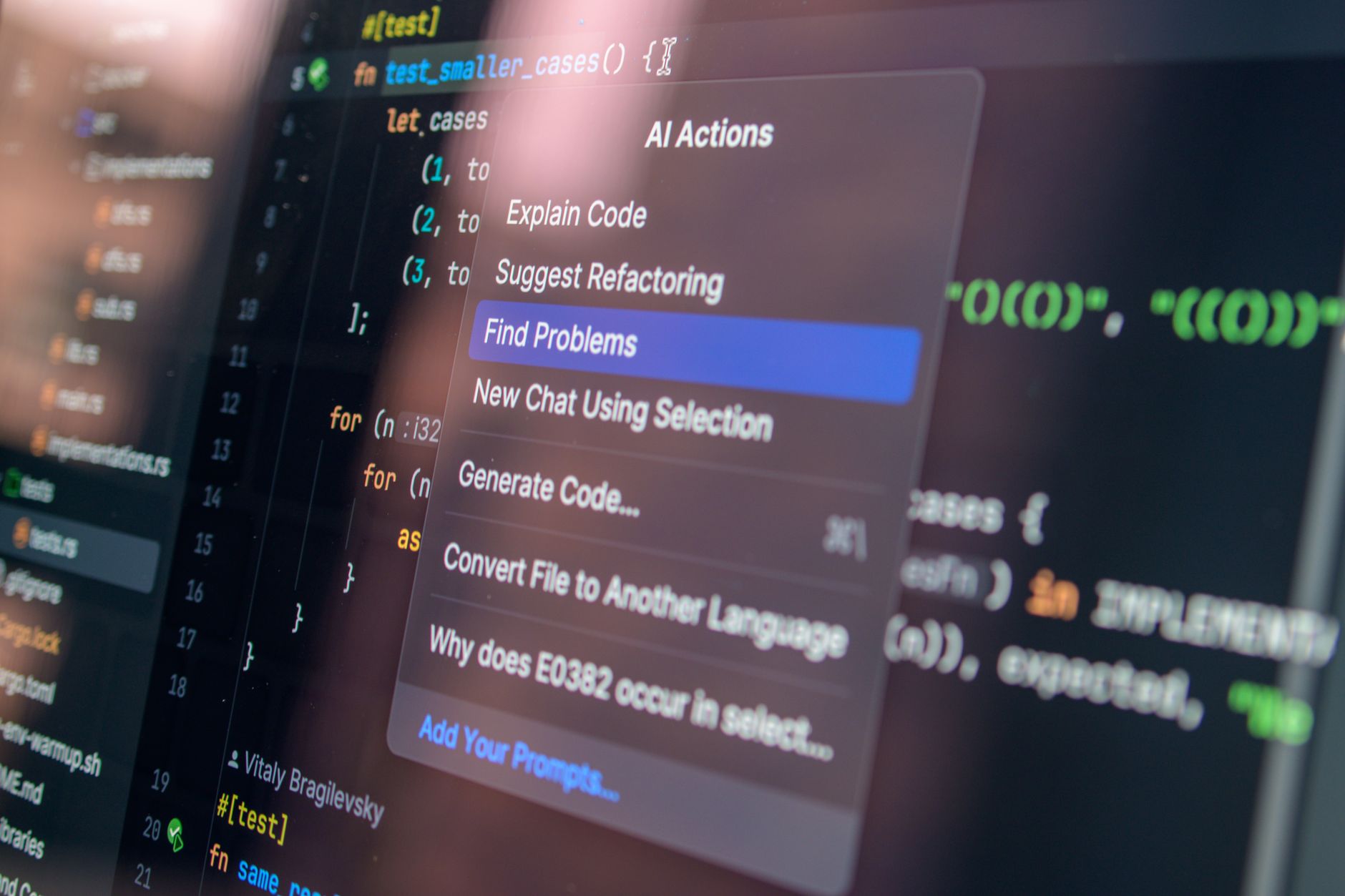
1) Generate code you can actually run
A practical AI coding assistant helps you move from intent to working artifacts: small functions, complete modules, or endpoint scaffolds. The key is to provide enough context—types, expected inputs/outputs, and edge cases—so the generated code matches your project conventions.
2) Draft tests and edge cases earlier
Writing tests late is a common bottleneck. Many developers use an AI code generation approach to draft unit tests, integration checks, and boundary scenarios before the main logic is finalized. That enables earlier verification and reduces the cost of change.
3) Refactor with confidence
Refactoring is riskier when you can’t quickly validate behavior. An automated coding assistant can propose small, incremental changes and explain tradeoffs—especially when you ask it to follow established patterns or preserve existing semantics.
4) Keep style and conventions consistent
The best AI programming tool usage includes explicit instruction: linting rules, formatting guidelines, naming conventions, and architecture constraints. When those constraints are clear, the AI pair programming experience becomes more reliable.
From Prompt to Pull Request: A Workflow for Ship Code Faster with AI
“Ship faster” isn’t about pushing random code through CI. It’s about using AI for developers in a controlled loop. Here’s a workflow you can adopt immediately.
Step-by-step workflow
- Define the goal: What feature are you implementing, and what’s the expected output?
- Provide context: Key files, type definitions, existing functions, and relevant constraints.
- Ask for a plan: Request a high-level approach before code generation.
- Generate incrementally: Produce small pieces (one function, one module, one test suite).
- Review like a teammate: Validate edge cases, performance implications, and security concerns.
- Iterate: Have the AI software development assistant refine the code based on your feedback.
- Run checks: Execute tests, lint, and any required static analysis before committing.
This disciplined loop is how you ship code faster with AI while keeping quality stable. It also improves the results from the AI coding assistant because each iteration is grounded in reality.
Best Practices for Using an AI Coding Assistant (Without Losing Quality)
AI output can be impressive—but only consistent engineering practices make it dependable. Below are best practices for AI programming in real projects.
Prompting best practices
- Include acceptance criteria: Describe what “done” looks like (inputs, outputs, error handling).
- Specify your constraints: Framework, language version, style guide, and performance requirements.
- Request explanations: Ask the AI coding assistant to explain non-obvious decisions.
- Ask for alternatives: If there are multiple approaches, request a comparison and a recommendation.
- Tell it what to avoid: Prevent hallucinated APIs, insecure patterns, or breaking changes.
Code review and safety habits
- Verify assumptions: Confirm types, contracts, and data shapes.
- Check security-sensitive areas: Auth, authorization, injection risks, secrets handling, logging hygiene.
- Validate performance: Watch for N+1 queries, inefficient loops, or missing indexes.
- Ensure test coverage: Use AI-generated tests as a starting point, then confirm behavior with real cases.
- Keep diffs small: Merge in small increments to reduce review load.
These habits turn an AI pair programmer into a productivity multiplier instead of a source of accidental complexity.
Choosing the Right AI Programming Tool for Your Team
Not every AI for developers tool fits every team. When evaluating an AI programming tool, look for capabilities that support your engineering workflow—not just flashy demos.
| Capability | What to Look For | Why It Matters for Developer Productivity AI |
|---|---|---|
| AI coding assistant workflows | Chat + code context, iterative edits, and refactor suggestions | Reduces time spent searching and re-deriving known patterns |
| AI code generation quality | Structured outputs, correct signatures, edge-case awareness | Fewer rework cycles and more “run-ready” code |
| AI pair programming support | Maintains project conventions and asks clarifying questions | Higher accuracy for ambiguous requirements |
| Testing assistance | Unit/integration test drafting and boundary scenario suggestions | Earlier verification and safer merges |
| Security and safety cues | Guidance for authz, validation, and secure defaults | Reduces risk of vulnerabilities in generated code |
| Developer control | Clear diffs, review-friendly changes, and transparency | Supports code review standards and team trust |
| Access and onboarding | Free access options and straightforward setup | Encourages adoption and faster team ramp-up |
If you’re exploring options, consider trying AIZora—it offers free access so you can evaluate an AI software development workflow without upfront risk.
Use Cases: Where AI Programming Assistant Impact is Immediate
The fastest wins with AI for developers usually come from high-frequency tasks. Here are common scenarios where an AI code generation approach delivers measurable time savings.
1) Building APIs and backend services
Use an AI coding assistant to scaffold routes, validation logic, and response models. Then request tests for typical success and failure flows.
2) Integrating third-party services
When integrating SDKs or REST APIs, ask for mapping logic, error handling patterns, and typed wrappers. This reduces the time spent reading docs and experimenting.
3) Writing migrations and data transformations
Have an AI pair programming workflow propose migration scripts and transformation steps. Be sure to request rollback strategies and data safety checks.
4) Frontend components and UI logic
An automated coding assistant can help with state management patterns, component props, and event handling. You still need to review accessibility and UX behavior—but you’ll get there faster.
5) Documentation and developer experience
Generate README sections, inline documentation, and usage examples. Good documentation improves onboarding and reduces repetitive questions.
AI Pair Programming in Real Life: A 10-Minute Start Plan
If you want to start using an AI pair programmer today, don’t overthink it. Follow this quick plan for an immediate payoff.
- Pick one small task: e.g., write a function, add an endpoint, or draft unit tests.
- Paste the relevant files: Interfaces, existing helpers, and any failing tests.
- Ask for a minimal implementation: “Generate only what’s needed to pass tests.”
- Request edge cases: “List 5 likely failure modes and update tests.”
- Review and run: Execute tests and fix any mismatches to your codebase.
- Save your prompt: Turn successful prompts into repeatable templates for future work.
This is the fastest way to ship code faster with AI—by turning AI assistance into a repeatable engineering habit.
Common Pitfalls (and How to Avoid Them)
To maximize outcomes from AI for developers, watch for these pitfalls.
Pitfall 1: Treating AI output as “always correct”
AI coding assistant output can contain subtle bugs or mismatched assumptions. Always validate with tests and code review.
Pitfall 2: Overprompting without structure
If your request is vague, you’ll get vague code. Provide acceptance criteria, inputs/outputs, and constraints. This improves AI code generation accuracy.
Pitfall 3: Ignoring existing architecture
Ask the AI programming tool to follow established patterns in your repo. Mention where code should live and how it should integrate.
Pitfall 4: Skipping test refinement
Let AI draft tests, but refine them. The goal is meaningful coverage—not just green checks.

Conclusion: AI for Developers Means Faster Feedback, Not Fewer Engineers
AI for developers is most valuable when it improves feedback loops: faster drafting, quicker testing, and more confident iteration. With the right AI pair programmer and AI coding assistant workflow, you can ship code faster with AI while maintaining quality, security, and team standards.
Whether you’re using an AI programming tool for AI code generation, building with an automated coding assistant, or adopting AI software development best practices, the winning strategy is consistent: provide context, generate in small steps, review like a teammate, and run your checks.
Ready to explore? Try an AI for developers experience on AIZora with free access, and start building your own repeatable prompts for developer productivity AI.