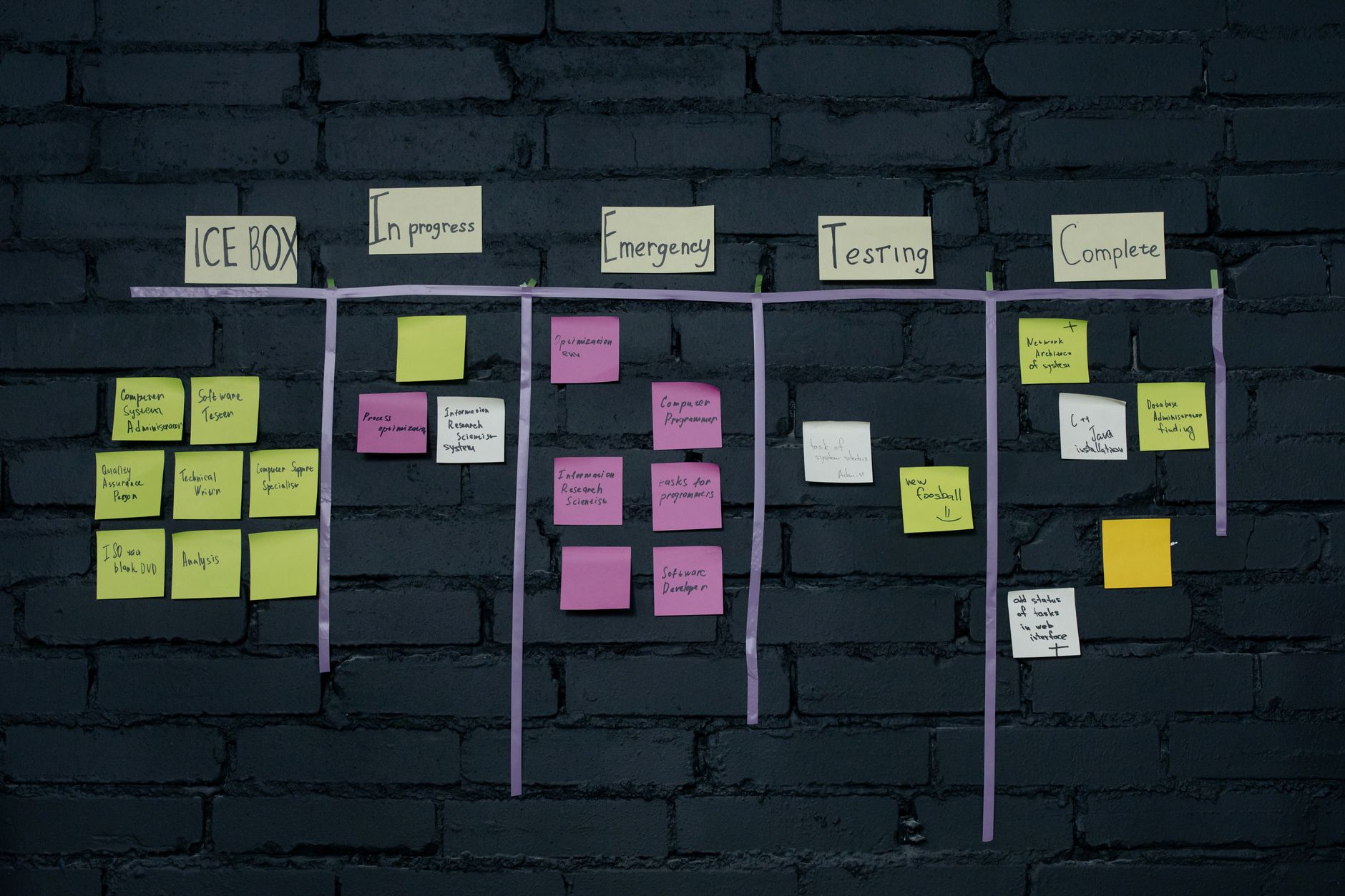
Introduction: Why AI for Product Managers is becoming essential
Product managers are expected to do more than write requirements. You translate messy customer signals into a clear product strategy, define outcomes, align stakeholders, and help teams ship. But the most time-consuming parts—drafting PRDs, shaping roadmaps, writing user stories, and keeping priorities consistent—can feel repetitive and slow.
That’s where an AI product manager tool comes in. Using AI product manager tooling, you can accelerate the work behind automated PRD writing, create product roadmap with AI, and generate user stories with AI while keeping the final call on quality and direction in your hands. If you’re exploring options, you can try free access on AIZora to see how these workflows fit your style.
In this guide, we’ll walk through how AI supports the core artifacts of product management—PRDs, roadmaps, user stories, and strategy—plus best practices to keep outputs crisp, decision-oriented, and stakeholder-ready.
How an AI PRD generator improves clarity, alignment, and speed
A PRD is more than a document. It’s a decision tool. When done well, it answers: What are we building, for whom, why now, and how will we measure success? When done poorly, it becomes a debate magnet—vague goals, missing assumptions, and unclear scope.
An AI PRD generator helps by turning your notes, research, and constraints into a structured draft. Many teams use AI for product managers to start fast and iterate based on stakeholder feedback. The best workflows don’t “replace thinking”—they reduce blank-page friction.
What AI-assisted PRDs should include
- Problem statement grounded in customer pain and evidence
- Goals and non-goals to prevent scope creep
- Target users with key jobs-to-be-done or segment notes
- Proposed solution with high-level capabilities
- Assumptions and risks to surface unknowns early
- Metrics and success criteria (leading + lagging)
- Dependencies across design, engineering, data, and legal
- Open questions for decision-ready next steps
Best practices for automated PRD writing
- Provide “inputs,” not just prompts: paste customer quotes, support tickets, experiment results, or meeting notes.
- Use AI to generate structure first: accept an outline draft, then refine the substance.
- Force specificity: ask the AI to include measurable metrics and explicit non-goals.
- Review the “why”: ensure every claim ties back to evidence or a stated assumption.
- Keep stakeholder language consistent: adjust tone to match execs, designers, and engineers.
From ideas to roadmap: create product roadmap with AI
Roadmaps are where strategy becomes a sequence of bets. A common challenge: roadmaps get created once (maybe) and then fail to adapt to new learnings, capacity changes, or shifting priorities. AI can help you draft roadmaps quickly and maintain coherence between goals, initiatives, and outcomes.
An AI product roadmap builder can support your process by organizing initiatives, mapping dependencies, and turning themes into an ordered plan. This is especially helpful when you’re consolidating input from multiple teams or trying to translate quarterly objectives into deliverables.
Roadmap elements AI can help you connect
- Themes tied to strategic intent (e.g., retention, efficiency, expansion)
- Initiatives with clear outcomes and scope boundaries
- Dependencies and cross-functional constraints
- Time horizons (now/next/later) or quarter-by-quarter plans
- Assumptions that may need validation
- Measurement approach for each initiative
Create a decision-ready roadmap (not just a timeline)
When you’re using create product roadmap with AI, aim for a roadmap that supports trade-offs. Ask the AI to produce:
- Justification for why an initiative belongs in a given window
- Expected impact and the risk/effort balance
- Key milestones that enable learning—not only shipping
- Roll-up metrics that show how work ties to outcomes
Finally, don’t forget the human step: align with stakeholders and adjust the plan based on capacity realities.
Generate user stories with AI that engineering teams actually use
Bridging strategy to execution requires strong user stories. Yet writing quality stories consistently is hard—especially under time pressure. In many orgs, stories are either too vague (“Improve onboarding”) or too technical (“Add endpoint for…”), making it difficult for teams to implement and validate.
With generate user stories with AI (including an AI user story generator workflow), you can create story drafts tied to user outcomes, acceptance criteria, and measurable success conditions.
A strong story format for AI-assisted drafting
Use a consistent template so the AI produces repeatable artifacts:
- User: who benefits
- Need: what they want
- Outcome: why it matters
- Acceptance criteria: testable conditions
- Edge cases: boundaries and exceptions
- Analytics hooks: what to measure
Prompt tips to get better stories
- Start from a PRD section: feed the AI the corresponding capability or problem statement.
- Specify the user persona: include segment assumptions and context.
- Demand measurable acceptance criteria: require “given/when/then” or explicit checks.
- Ask for instrumentation: request event names, properties, or dashboards conceptually.
- Review for scope: make sure stories remain implementation-ready without sneaking in future work.
AI product strategy assistant: keep your decisions coherent
While PRDs and roadmaps are tangible artifacts, the real differentiator is strategy: what you choose to do, what you choose to avoid, and how you decide when to pivot. An AI product strategy assistant can help by structuring your thinking across market context, user needs, competitive dynamics, and internal constraints.
Here’s what strategy workflows often require from AI:
- Clarifying strategic hypotheses (what must be true for success)
- Mapping user problems to value propositions
- Turning research into implications
- Suggesting strategic options with pros/cons and trade-offs
- Connecting initiatives to measurable outcomes
How to use AI without losing product judgment
AI is strongest at synthesis and drafting, but your judgment is what ensures the product direction fits reality. Use a “human-in-the-loop” approach:
- Validate assumptions with customer evidence and feasibility input.
- Confirm constraints (compliance, data availability, platform limits).
- Choose a strategy stance: growth, retention, efficiency, or differentiation—then align PRDs and stories to it.
- Perform contrarian review: ask AI to generate counterarguments or “failure modes.”
Tip: Treat AI outputs as drafts for decision-making, not as final truth—especially for strategy and success metrics.
AI backlog prioritization: ranking work with transparency
Even when PRDs and stories are strong, teams still struggle with priority. Backlog items multiply, urgencies collide, and “highest value” becomes a slogan instead of a method. This is where AI backlog prioritization can help.
By combining inputs like impact, effort, risk, customer value, and alignment to goals, AI can create a prioritized ordering and explain the rationale behind it—useful for stakeholder alignment.
Prioritization inputs that improve AI results
- Value signals: revenue potential, retention impact, customer pain frequency
- Effort estimates: engineering, design, data, and QA workload
- Time sensitivity: regulatory dates, market windows, competitor moves
- Dependencies: what blocks what
- Risk and uncertainty: unknowns that affect success
Best practices for using product management AI tools
- Standardize scoring: use a shared rubric so comparisons are consistent.
- Require explanations: ask for “why this is ranked above that.”
- Don’t overfit to one metric: balance customer value with strategic alignment.
- Re-run prioritization regularly: incorporate new research and delivery progress.
- Separate discovery vs delivery: include learning milestones, not only shipped features.
| PM Artifact | Common Bottleneck | Where AI Helps Most | What You Must Still Do |
|---|---|---|---|
| PRDs | Blank-page writing and missing structure | AI PRD generator for outline, sections, metrics, assumptions | Validate evidence, refine decisions, confirm scope |
| Roadmaps | Connecting initiatives to strategy and timing | AI product roadmap builder to map themes, outcomes, dependencies | Confirm capacity, update based on constraints |
| User Stories | Vague or non-testable stories | AI user story generator for story structure and acceptance criteria | Adjust details, ensure technical feasibility |
| Backlog | Unclear trade-offs and stakeholder misalignment | AI backlog prioritization using impact/effort/risk inputs | Approve rubric, watch for bias, re-prioritize as facts change |
| Strategy | Disjointed thinking across research and plans | AI product strategy assistant for synthesis and options | Set strategic stance and arbitrate trade-offs |
End-to-end workflow: PRD to roadmap to stories to execution
The real power of AI for product managers emerges when you connect artifacts into a single workflow. Here’s an end-to-end approach you can adapt with an AI product manager tool—especially when you want to reduce churn between docs.
Recommended workflow
- Draft the PRD using an AI PRD generator (problem, goals, non-goals, metrics, risks).
- Convert PRD outcomes into initiatives and use AI product roadmap builder to order them (now/next/later).
- Generate user stories from each capability and refine acceptance criteria (use generate user stories with AI).
- Prioritize the backlog with AI backlog prioritization so teams know what matters most.
- Review strategy coherence with an AI product strategy assistant to ensure initiatives support the chosen bets.
What to standardize across your team
- Templates for PRDs, stories, and roadmap entries
- Metric definitions (what “success” means and how it’s measured)
- Decision logs to track assumptions and revisions
- Quality gates (testable criteria, non-goals, risks, ownership)
When you standardize inputs and outputs, AI becomes a consistent co-pilot rather than a one-off drafting machine.
Choosing AI product management AI tools and getting the best results
Not all product management AI tools are the same. Some focus on drafting, while others support planning, prioritization, and workflow continuity. If you’re aiming for automated PRD writing plus roadmap and story generation, look for capabilities that preserve structure and reduce rework.
Evaluation checklist
- Artifact coverage: PRDs, roadmaps, user stories, and backlog outputs
- Template control: customization for your organization’s format
- Traceability: clear links from PRD goals to initiatives and stories
- Quality safeguards: prompts or constraints that force measurable outputs
- Workflow fit: supports iterative refinement and stakeholder review
- Cost and access: consider trying free access on AIZora before committing
Practical best practices to keep outputs high-quality
- Use “clarifying constraints”: ask for risks, non-goals, and acceptance criteria explicitly.
- Limit scope per output: generate stories by capability to avoid giant, unwieldy batches.
- Require metrics: ensure success criteria are measurable and tied to the problem.
- Run a consistency check: goals in the PRD should match roadmap initiatives and story acceptance criteria.
- Maintain a feedback loop: each iteration improves future drafts as your team refines templates.
Conclusion: AI product manager tooling helps you ship better decisions faster
AI is changing how product managers write, plan, and align. With an AI product manager tool, you can streamline everything from AI PRD generator drafting to AI product roadmap builder planning, from AI user story generator creation to AI backlog prioritization and AI product strategy assistant synthesis.
The biggest win isn’t that AI replaces your role—it’s that it removes the repetitive friction so you can spend more time on the parts that only you can do: setting direction, making trade-offs, and validating what matters.
If you want to test these workflows yourself, you can start with free access on AIZora and see how quickly you can go from raw ideas to a structured PRD, a coherent roadmap, and engineering-ready user stories.