Introduction: AI for Trading in Real Markets
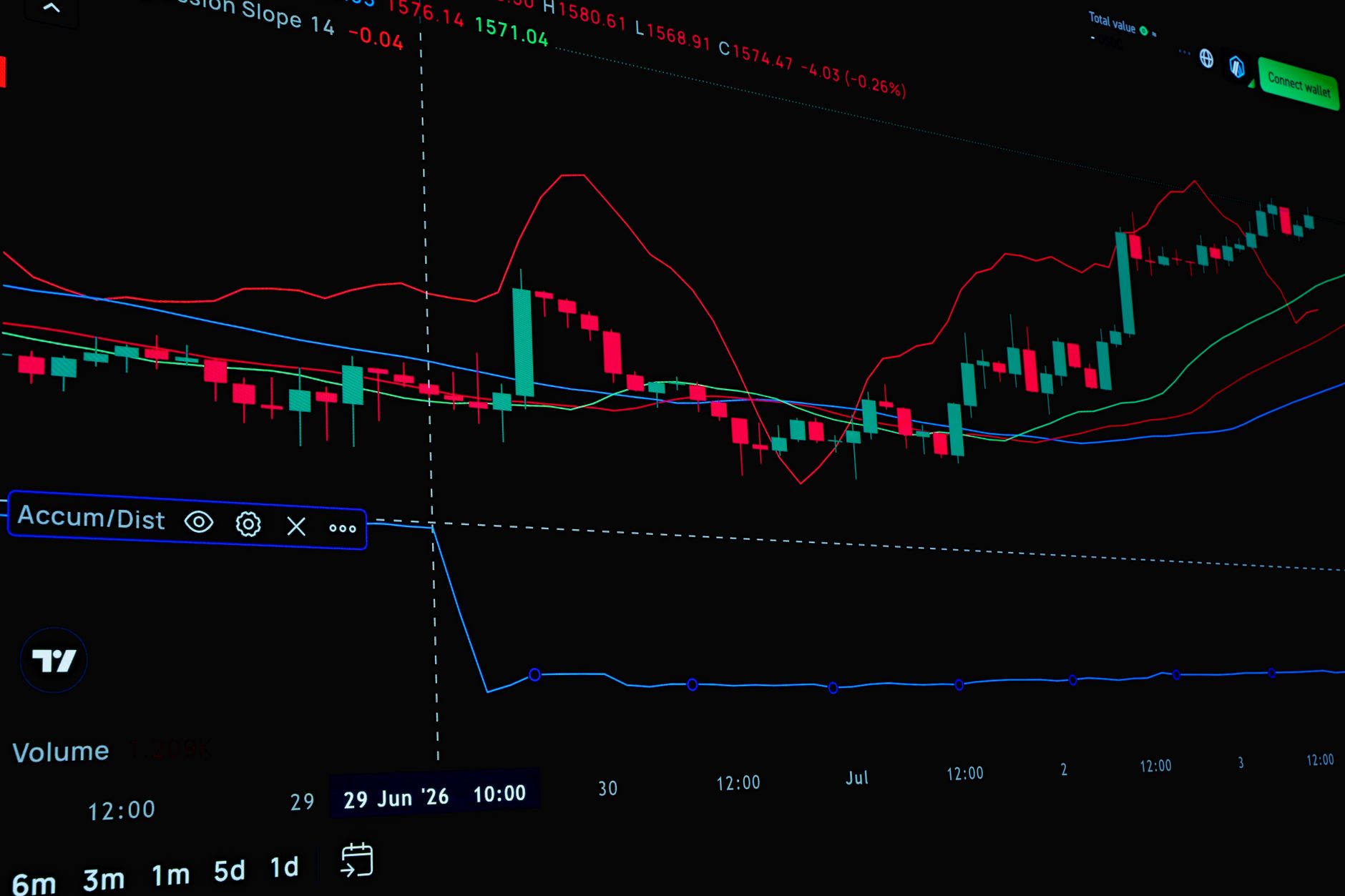
AI for trading is moving from hype to practical workflow. Instead of manually scanning charts, you can use an AI market analysis tool to process market data faster, identify patterns that are easy for humans to miss, and translate those findings into AI trading signals and decision-ready insights.
Whether you’re interested in an automated trading AI approach, exploring an AI trading strategy generator, or testing AI forex trading signals, the core goal stays the same: improve the consistency of your analysis and reduce reaction time when market conditions change.
In this guide, you’ll learn how AI supports AI financial analysis, how to build and evaluate trading strategies, and what to watch for when using AI trading bot automation or an algorithmic trading AI tool. You’ll also see best practices for risk management and signal validation, and how you can get started with free access on AIZora.
1) What “AI for Trading” Actually Does (Beyond Hype)
At a high level, AI for trading uses statistical learning and (often) machine learning methods to find relationships between inputs (market data) and outputs (signals, forecasts, or strategy parameters). But it’s important to separate capability from guarantees. No model can promise profits, yet AI can help you trade more systematically.
Key components
- Feature extraction: transforming raw data (prices, volume, volatility, order-book stats, macro indicators) into model-friendly signals.
- Pattern recognition: detecting regime shifts, trend persistence, mean reversion behavior, or anomaly-like moves.
- Forecasting & classification: predicting future direction/volatility or classifying likely scenarios (e.g., “breakout probability high”).
- Signal generation: converting model outputs into actionable rules such as entry/exit timing and confidence scoring.
- Execution support: when paired with automation, the system can place trades according to risk constraints.
Common trading use cases
- AI trading signals for entry triggers, trend confirmation, or risk-off alerts
- AI stock market predictor style forecasts for horizons ranging from intraday to swing
- AI portfolio optimization suggestions for balancing risk and expected return across holdings
- AI financial analysis dashboards that summarize drivers behind moves
- AI trading bot or automated trading AI workflows that enforce consistent execution rules
2) AI Market Analysis: Turning Data into Trading Context
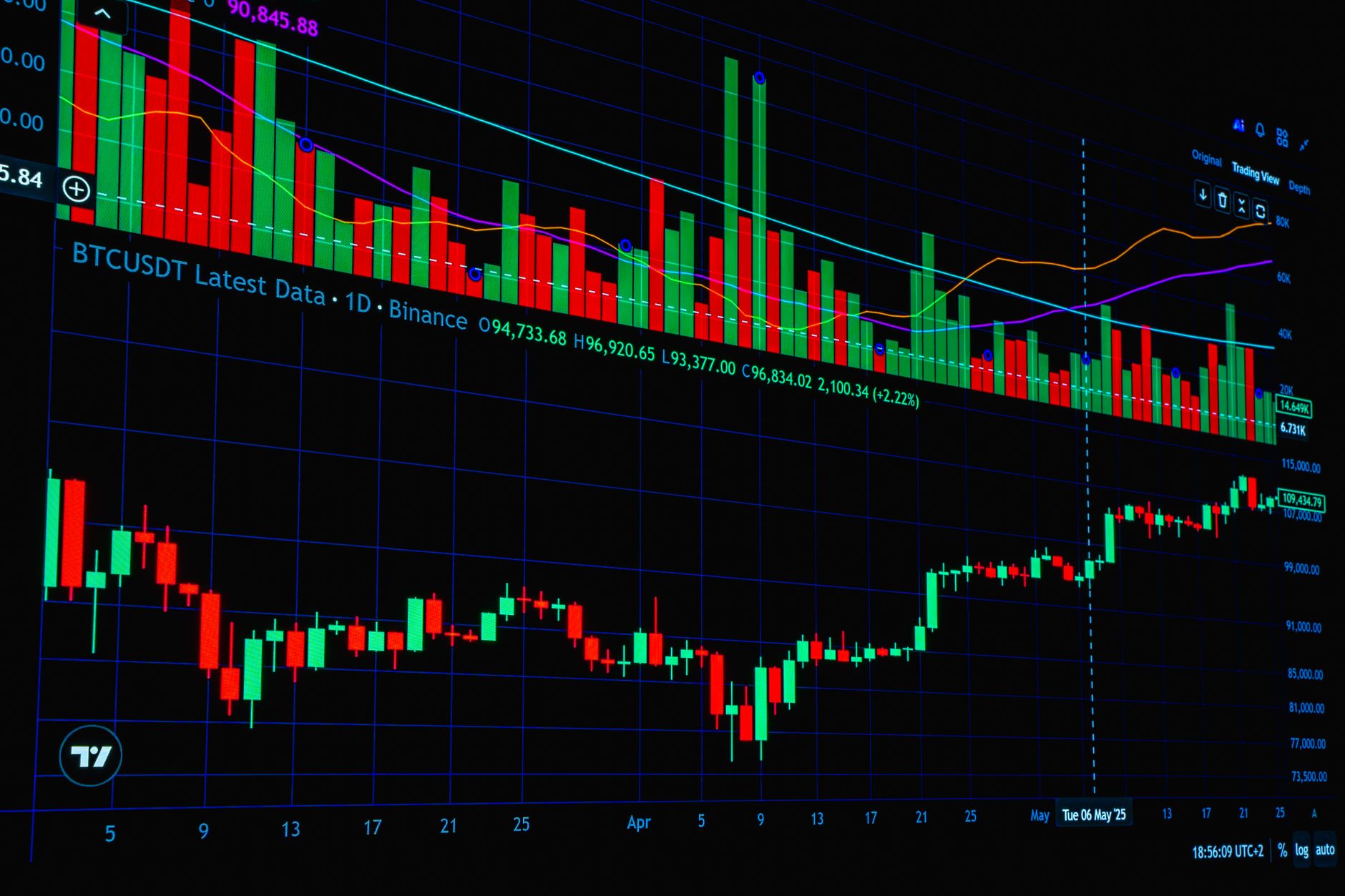
Most traders fail not because they can’t find patterns, but because they can’t connect patterns to context: the current market regime, expected volatility, liquidity conditions, and upcoming catalysts. A strong AI market analysis tool addresses this by summarizing what matters now and what might change soon.
Market analysis inputs AI can use
- Technical signals: moving averages, RSI, MACD, Bollinger Bands, ATR, support/resistance structures
- Volatility measures: realized volatility, implied volatility proxies, volatility expansion/contraction
- Market microstructure: volume profiles, liquidity proxies, spread or order-flow indicators (where available)
- Cross-asset context: correlations (equities vs. crypto), FX influences, rates sensitivity
- Macro and calendar events: earnings seasons, CPI/FOMC timing, major economic releases
How AI improves analysis quality
- Faster synthesis: AI can scan multiple timeframes and indicators simultaneously.
- Consistency: rules-based interpretation reduces “analysis drift” from emotion.
- Scenario framing: instead of a single prediction, AI can output probabilities across scenarios.
- Signal confidence scoring: many AI trading signals include a confidence or risk score to help filter trades.
What to demand from an AI workflow
- Clear definition of signal horizon (intraday, daily, weekly)
- Transparent signal logic (at least at the feature/rationale level)
- Backtesting support and performance metrics
- Risk controls such as max drawdown limits
3) Trading Strategies Powered by AI (A Practical Playbook)
The phrase AI trading strategy generator can mean different things. Some tools generate trade ideas, others help you compose rule templates, and some provide automated parameter tuning. Regardless of the interface, the key is to convert AI outputs into repeatable strategy behavior.
Strategy archetypes AI can help you implement
- Trend-following with regime filters: AI identifies when a trend regime is active, then strategies trade pullbacks.
- Mean reversion around volatility bands: AI estimates whether returns are likely to revert based on current dispersion.
- Breakout detection: AI helps quantify breakout probability vs. false-break risk.
- Momentum rotation: AI ranks assets by relative strength and suggests rotation between sectors or pairs.
- Event-driven overlays: AI adjusts expected ranges around earnings or macro releases.
A strategy blueprint you can adapt
- Define the market universe: choose instruments (stocks, ETFs, crypto pairs, or FX pairs).
- Set the timeframe: align AI horizon with your holding period.
- Collect signals: use AI trading signals for direction, volatility, and confidence.
- Apply filters: only trade when regime and risk conditions match your playbook.
- Set entry/exit rules: define triggers (e.g., confirmation candle) and exit logic (TP/SL or trailing stops).
- Risk sizing: use position sizing rules (e.g., % of equity per trade).
- Review results: evaluate win rate, average payoff, drawdowns, and stability across periods.
4) AI Financial Signals: From Prediction to Action
To use AI effectively, you need to understand the difference between prediction and a trade decision. An AI stock market predictor might output a directional forecast, but a trader needs rules: when to act, how much to risk, and when to stop.
Common AI signal outputs
- Direction probability: likelihood of upward/downward movement over a horizon
- Volatility forecast: expected volatility range for setting stops and position size
- Breakout/breakdown score: probability of a price level being respected or violated
- Trend strength metric: whether momentum is strong enough to justify trend trades
- Mean reversion likelihood: indicator-based confidence that price may revert
- AI portfolio optimization: suggested weights based on risk and expected return assumptions
Turning signals into orders (example logic)
Consider a simple workflow: if the model’s probability of upside exceeds your threshold and volatility is within your acceptable band, you enter with a stop based on ATR or a volatility estimate. You exit either at a predefined take-profit level or if confidence degrades.
Best practice: treat AI outputs as inputs to your system, not as a replacement for risk management.
| AI Trading Capability | What You Get | Best Use Case | Key Risk to Manage |
|---|---|---|---|
| AI trading signals | Actionable entries/exits with confidence or scores | Filtering trades and defining triggers | Overtrading during low-quality regimes |
| AI market analysis tool | Regime detection and market context summaries | Deciding which strategy archetype to run | Model drift when volatility regimes change |
| AI trading strategy generator | Rule templates and parameter suggestions | Rapid prototyping of your playbook | Overfitting to backtest conditions |
| Automated trading AI | Rule execution and signal-to-order automation | Consistent execution and faster reaction | Execution slippage and connectivity failures |
| Algorithmic trading AI tool | Systematic strategies using quantitative logic | Batch testing and portfolio-level evaluation | Hidden assumptions in data feeds |
| AI forex trading signals | Cross-market signals for FX pairs | Trading currency trends with volatility awareness | Sudden macro shocks and liquidity shifts |
| AI portfolio optimization | Suggested allocations and risk balancing | Reducing concentration risk across assets | Correlation breakdown during crises |
5) Building an AI Trading Bot and Automating Decisions
An AI trading bot (or an automated trading AI system) is most effective when it follows strict rules. Automation isn’t just about “letting AI trade.” It’s about implementing your strategy with guardrails.
Automation architecture (simple but robust)
- Signal engine: receives AI trading signals and confidence scores.
- Strategy logic: decides whether the signal meets your thresholds.
- Risk manager: enforces max exposure, max drawdown, and position limits.
- Execution layer: places orders using predefined order types (limit/market/stop).
- Monitoring & logs: records decisions for later auditing.
- Fail-safes: halts trading on data issues or unusual volatility spikes.
Best practices for bot safety
- Start with paper trading: validate signal-to-execution behavior before risking capital.
- Use conservative position sizing: especially when confidence scoring is involved.
- Throttle trade frequency: prevents churn and reduces costs.
- Account for trading fees and slippage: backtests must reflect realistic execution.
- Set kill switches: automatically pause if performance deviates sharply.
6) Testing, Backtesting, and Avoiding Common AI Trading Mistakes
Even the best AI financial analysis is only as reliable as your testing discipline. The biggest errors are often not model math problems—they’re evaluation problems.
What to test (beyond returns)
- Drawdowns: maximum and average drawdown matters more than raw CAGR.
- Stability: does performance hold across multiple market regimes?
- Sensitivity: how performance changes when thresholds or parameters vary slightly?
- Turnover and costs: evaluate fees, spreads, and slippage impact.
- Out-of-sample performance: ensure the model didn’t “learn” the test period.
Avoid these pitfalls
- Overfitting: a model that fits historical noise can fail when markets change.
- Look-ahead bias: using information that wouldn’t be available at decision time.
- Data leakage: accidental inclusion of future data in features.
- Ignoring regime shifts: a strategy may work only in trending or only in ranging markets.
- Blind trust: treating AI trading signals as certain rather than probabilistic.
How to validate AI signals efficiently
- Use a walk-forward approach (train on one period, test on the next).
- Compare AI strategy outputs vs. a simple baseline (e.g., buy-and-hold or moving-average crossover).
- Track confusion metrics (for directional signals) or calibration (if confidence scores exist).
- Measure performance net of realistic costs.
7) Best Practices to Get Better Results with AI Trading Signals
AI can be a powerful assistant, but your process determines the outcome. Here are practical best practices to improve results—especially when using an AI trading strategy generator or algorithmic trading AI tool.
Trading workflow best practices
- Define your edge hypothesis: what market behavior do you expect to capture?
- Use thresholds and filters: trade only when AI confidence aligns with your risk tolerance.
- Align AI horizon to your holding period: intraday signals shouldn’t govern long-term positions.
- Limit exposure: avoid stacking correlated trades that react similarly to news.
- Review “signal failures”: identify cases where AI confidence was high but outcomes were poor.
- Continuously update your assumptions: as market structure evolves, revalidate your strategy.
Risk management checklist
- Max risk per trade (e.g., 0.5%–1% of account equity)
- Stop-loss placement based on volatility (ATR or similar)
- Take-profit logic to avoid indefinite holding
- Daily loss limits and trading halt rules
- Position limits across asset classes (especially for AI portfolio optimization ideas)
If you want an accessible starting point, you can try building and exploring these workflows with free access on AIZora, including AI-driven market analysis and signal exploration designed for traders and analysts.
Conclusion: Use AI for Trading as a System, Not a Shortcut
AI for trading works best when you treat it as an evidence engine and automation layer for your existing discipline. With a capable AI market analysis tool, you can generate AI trading signals, translate them into structured strategies using an AI trading strategy generator, and—when ready—deploy automated trading AI or an AI trading bot with strong risk controls.
The practical path is clear: analyze the market regime, choose the right strategy archetype, validate signals with out-of-sample testing, then automate execution carefully. Whether you’re looking at AI stock market predictor use cases, experimenting with AI forex trading signals, or optimizing allocations with AI portfolio optimization, the winning approach is the same—systemize decisions, measure outcomes, and protect your capital.
Ready to get started? Explore AI trading workflows with free access on AIZora, and turn market signals into a repeatable trading process.