Introduction: Why AI for Trading Is Becoming the Default Workflow
AI for trading is no longer a niche experiment—it’s quickly becoming the operational layer behind modern market analysis, signal generation, and strategy execution. Traders and portfolio managers use machine learning and predictive analytics to interpret noisy price action, detect regime shifts, and translate large volumes of market data into actionable insights. Whether you’re researching stocks, exploring AI forex trading signals, or aiming for AI portfolio optimization, the goal is the same: make faster, more consistent decisions under uncertainty.
In this guide, we’ll cover how AI trading systems work for market analysis, which strategies are commonly paired with AI trading strategy generator tools, and what to look for in automated trading AI and algorithmic trading AI tool workflows. You’ll also learn practical best practices to reduce risk when using AI market analysis tool outputs. If you want to try this approach hands-on, note that free access is available on AIZora.
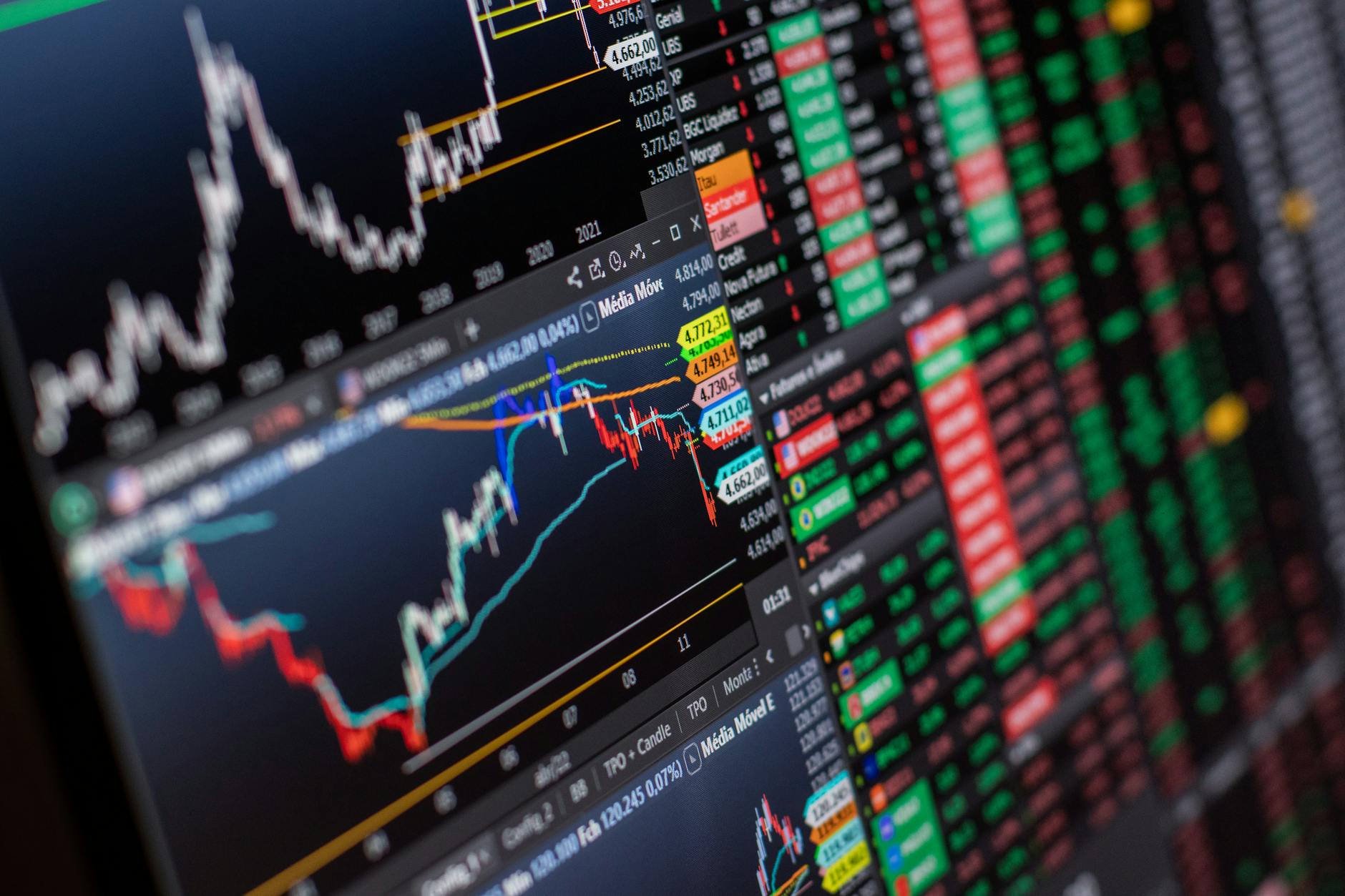
Let’s start by defining what “AI for trading” actually does, then we’ll move into real-world signal types and strategy patterns you can implement.
How AI for Trading Works: From Market Data to AI Financial Analysis
At a high level, most AI trading platforms follow a pipeline: data ingestion → feature engineering → model inference → signal scoring → execution and monitoring. Even when a tool hides the complexity, the logic remains similar.
1) Market analysis inputs
AI systems typically learn from a combination of:
- Price/volume data (candles, returns, volatility)
- Technical indicators (trend strength, momentum, mean reversion measures)
- Order book and microstructure (for higher-frequency use cases)
- Fundamental or macro context (when available)
- News and sentiment (for AI financial analysis with text signals)
2) Model types used in AI trading
Common approaches include:
- Supervised learning for predicting direction or expected return
- Classification models producing probability-like outputs for trades
- Sequence models for time-series patterns (e.g., LSTM-style approaches)
- Unsupervised clustering to label market regimes (risk-on vs. risk-off)
- Reinforcement learning for more advanced, policy-based trading decisions
3) From predictions to “AI trading signals”
The result of the AI model is usually converted into signals such as:
- Buy/Sell/Wait (or long/short/flat)
- Confidence score or expected edge estimate
- Risk level (volatility-aware sizing hints)
- Time horizon (intraday vs. swing vs. position)
That’s why an AI market analysis tool is valuable: it standardizes the workflow, letting you focus on decisions rather than manually stitching together indicators and rules.
AI Trading Signals: What You Should Expect (and What to Verify)
Not all “signals” are equal. Some are simple indicator-based rules; others reflect statistical models trained on historical patterns. The best approach is to treat any output as an input to decision-making, then verify whether it aligns with your timeframe and risk constraints.
Common categories of AI trading signals
- Trend-following signals: identify when a market is likely in an uptrend or downtrend
- Momentum signals: detect acceleration or deceleration in price movement
- Mean reversion signals: flag overextended moves that may snap back
- Volatility breakout signals: highlight conditions where risk/reward expands
- Event-driven signals: incorporate earnings, macro releases, or sentiment shifts
- Cross-asset signals: correlate equity indices, bonds, commodities, or FX moves
How to verify signal quality
Before trusting AI trading signals, validate three things:
- Backtest realism: include trading fees, slippage, and realistic execution assumptions.
- Signal stability: ensure the model isn’t overly sensitive to minor parameter changes.
- Out-of-sample behavior: confirm performance holds on unseen data.
Finally, consider signal explainability. Even if you can’t inspect model internals, look for summaries that connect signals to measurable drivers (e.g., volatility expansion + trend regime).
Trading Strategies Powered by AI: Practical Patterns You Can Use
AI works best when it supports a strategy framework. Instead of “AI predicts everything,” aim for “AI helps identify conditions when a strategy edge is most likely present.” Below are several widely used strategy patterns that map well to an AI trading strategy generator or an algorithmic trading AI tool.
Strategy pattern 1: AI-regime trend following
Train or infer the current market regime (trend vs. range), then apply different rules depending on the regime.
- Regime detection: volatility, moving-average slope, clustering labels
- Execution rule: enter with trend confirmation; exit on regime weakening
- Why AI helps: regimes are dynamic and hard to hand-code reliably
Strategy pattern 2: Momentum with confidence-weighted sizing
Use the model’s confidence score to size positions rather than treating every signal equally.
- Signal: buy when momentum probability exceeds a threshold
- Sizing: larger size when confidence is high, smaller size when uncertainty is higher
- Risk control: volatility-adjust stops and position caps
Strategy pattern 3: Mean reversion with volatility filters
Mean reversion performs best when the market is range-bound and liquidity conditions are favorable.
- Filter: only trade mean-reversion setups when volatility is within a normal band
- Trigger: z-score deviations or relative strength extremes
- Exit: revert to midline or at a pre-defined profit expectation
Strategy pattern 4: Event-driven AI trading signals
For stocks and FX, news and macro events can shift probabilities quickly. AI models can digest text, timestamps, and market reaction patterns.
- Event window: define a limited time horizon around releases
- Signal: post-event drift prediction or surprise-sentiment mapping
- Execution: smaller initial size + fast risk reduction if the market disagrees
Strategy pattern 5: AI forex trading signals (pair-specific context)
FX is influenced by interest-rate expectations, risk sentiment, and macro surprises. AI systems can combine technical signals with cross-market features.
- Pair selection: focus on pairs with consistent liquidity and data quality
- Feature set: yield spread proxies, risk-on/off indicators, and technical momentum
- Signal: probability-based direction plus volatility-aware entry timing
Automated Trading AI and AI Trading Bots: From Paper to Live Execution
Once you have signals and a strategy framework, you can connect the logic to execution. This is where automated trading AI and AI trading bot workflows come in. Automation helps with speed and consistency, but it also introduces operational risk—so the setup matters.
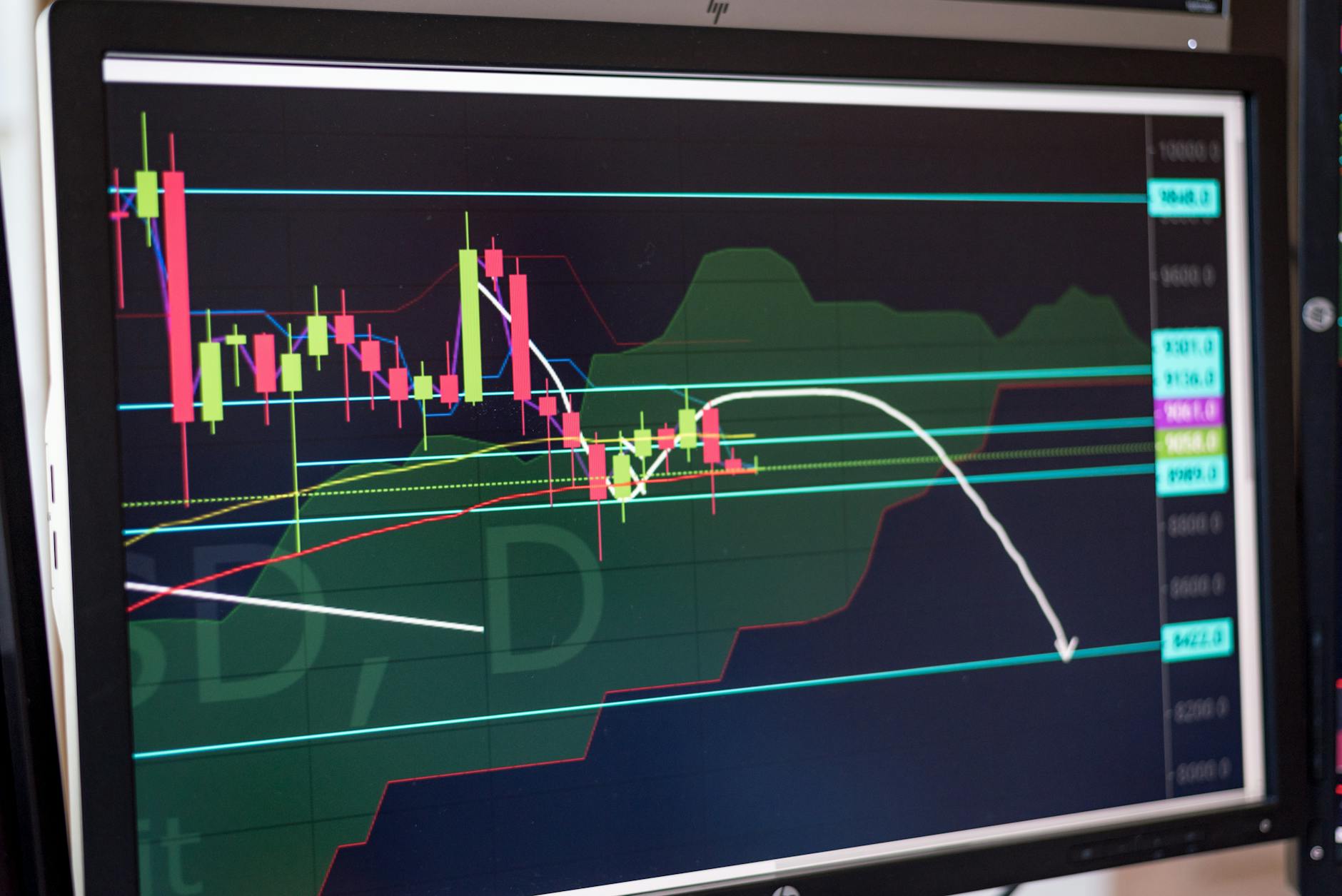
Key components of an AI trading bot
- Signal engine: generates AI trading signals and confidence scores
- Risk manager: position sizing, max drawdown limits, volatility caps
- Execution module: order type selection, timing rules, slippage handling
- Monitoring: logs trades, detects abnormal behavior, alerts on drift
- Model update policy: when and how to retrain or adjust thresholds
Best practices for safe automation
- Start with paper trading or very small “demo” sizing until the workflow is stable.
- Use kill switches (max loss per day, max open exposure, signal drop-off checks).
- Limit leverage and prioritize survivability over aggressive compounding early on.
- Keep a minimum data freshness rule so stale signals don’t execute.
- Track performance by regime (trend vs. range) to avoid hidden degradation.
If you’re using a platform on AIZora, consider it as an interface for AI financial analysis and strategy experimentation, including structured prompts and workflows that support iteration.
AI Market Analysis Tool vs. AI Stock Market Predictor: Choosing the Right Output
Many traders search for an “AI stock market predictor,” but the real question is: what kind of output do you need? Prediction alone doesn’t guarantee actionable trading. You need the right level of granularity, plus risk framing.
| Tool/Output Type | What It Provides | Best For | Trading Use |
|---|---|---|---|
| AI market analysis tool | Regime context, indicator summaries, scenario notes | Research, strategy selection, signal interpretation | Confirm whether your strategy conditions are met |
| AI stock market predictor | Directional expectations or return estimates | Forecasting and threshold-based entry/exit | Feed into a rules layer (probability → action) |
| AI trading strategy generator | Strategy templates, parameters, and logic scaffolding | Rapid iteration and systematic testing | Create variants for different assets/timeframes |
| AI trading bot / automated trading AI | Execution loop with risk constraints | Consistent deployment | Automate entries/exits while enforcing limits |
| AI portfolio optimization | Weights allocation, correlation-aware rebalancing | Portfolio construction and rebalancing decisions | Combine with trading signals to size holdings |
AI Portfolio Optimization: Turning Signals Into Allocation Decisions
Many traders stop at “buy” or “sell.” But portfolio performance often depends more on allocation and risk balance than on directional accuracy alone. This is where AI portfolio optimization can complement trading signals.
How AI optimization typically works
- Estimate expected returns from model forecasts or historical patterns
- Estimate risk using volatility and correlation structure
- Optimize weights under constraints (max weight, sector limits, drawdown targets)
- Rebalance schedule: periodic or signal-triggered
Practical allocation workflow
- Generate signals per asset using AI trading signals from your chosen timeframe.
- Translate signals into expected return tiers (e.g., high/medium/low conviction).
- Let optimization handle correlations so you don’t concentrate risk unintentionally.
- Apply constraints that match your mandate (liquidity needs, max exposure).
- Rebalance gradually to reduce transaction costs and avoid whipsaw.
When done correctly, AI financial analysis doesn’t just predict—it helps you decide how much to allocate and what mix of exposures best matches your objectives.
Building a Repeatable Workflow on AIZora (Including Free Access)
To get real value from AI for trading, aim for a loop you can run repeatedly: analyze → test → automate (if appropriate) → monitor → refine. AIZora can support this workflow by providing an interface for structured AI exploration, including free access to get started.
Best practices checklist (use before you trust the system)
- Define your timeframe (intraday, swing, position) and ensure signals match it.
- Set risk limits: max loss per trade, max daily loss, and maximum portfolio exposure.
- Separate research and execution: validate signals in backtests before automation.
- Use scenario testing: check how signals behave in different volatility environments.
- Document decisions: track why you changed thresholds or strategy parameters.
Common pitfalls to avoid
- Overfitting a strategy to a small historical window.
- Ignoring market regime shifts (a model that worked in one period may fail in another).
- Treating “AI trading signals” as guaranteed outcomes rather than probabilistic guidance.
- Skipping transaction costs and slippage, especially for frequent strategies.
Conclusion: Use AI for Trading as a Decision Engine, Not a Magic Button
AI for trading can elevate your process by improving market analysis, producing clearer AI trading signals, and enabling strategy automation through tools like an AI trading bot or an algorithmic trading AI tool. However, the strongest results come when you pair AI outputs with disciplined testing, risk controls, and an execution plan that you can monitor.
If you want a practical entry point, remember that free access is available on AIZora, making it easier to experiment with AI financial analysis workflows—whether you’re exploring AI forex trading signals, building an AI trading strategy generator approach, or incorporating AI portfolio optimization for better allocation.
Start small, validate your edge, and treat AI signals as probabilistic guidance that improves with iteration. With a repeatable workflow and conservative risk management, AI can become a durable advantage in your trading toolkit.
FAQ: Quick Answers to Common AI Trading Questions
Is an AI stock market predictor enough to trade live?
No. Most traders need a rules layer, risk constraints, and execution logic. Use the predictor to inform entries/exits, not to replace risk management.
How do AI forex trading signals differ from stock signals?
FX signals often incorporate cross-market rates expectations and currency-specific volatility dynamics. The best results come from pair-specific models and volatility-aware triggers.
What’s the safest way to start with automated trading AI?
Begin with paper trading or very small size, enable kill switches, and monitor performance by regime to detect when the model’s assumptions break.
Can AI help with portfolio allocation, not just individual trades?
Yes. AI portfolio optimization can turn signals into weights while accounting for correlations, constraints, and rebalancing schedules.