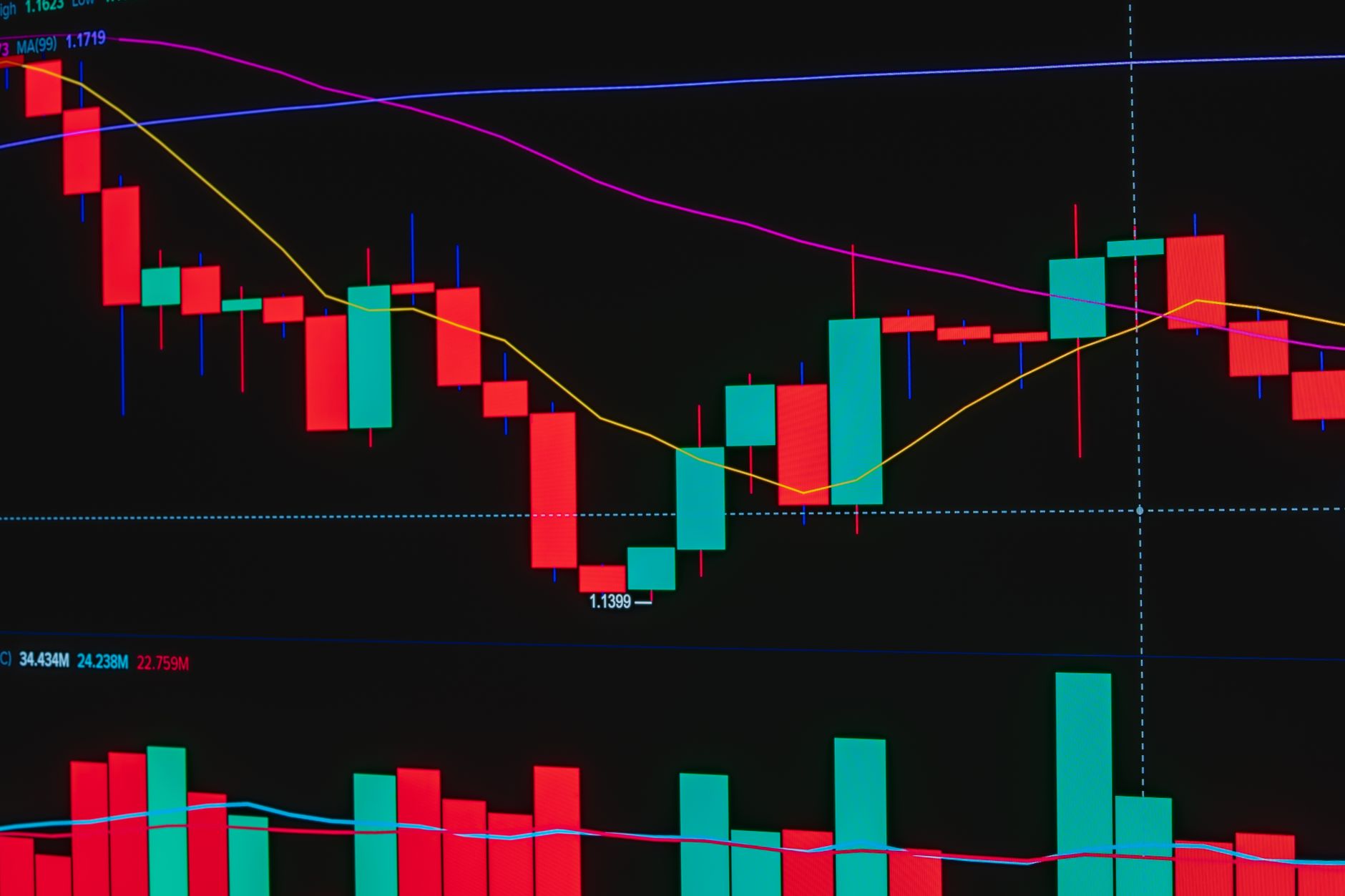
AI for trading has moved from experimental to practical. Instead of manually scanning charts, reading news, and guessing what comes next, traders and investors are increasingly using AI market analysis tools to translate large volumes of data into actionable insights. The promise is compelling: faster market analysis, more consistent decision-making, and a pathway to automated trading AI that can execute plans at scale.
In this guide, you’ll learn what AI trading actually does for markets—how it produces AI trading signals, supports AI financial analysis, helps generate a rules-based AI trading strategy generator, and can even power an AI trading bot for algorithmic execution. We’ll also cover important limitations, risk management, and best practices to avoid treating any AI stock market predictor like a guarantee.
Quick note: you can get free access on AIZora to explore AI-driven workflows for trading signals, analysis, and strategy ideation.
How AI for Trading Works: From Data to Decision
At its core, AI for trading is a pipeline. Data flows in, models interpret patterns, and outputs guide decisions. The most valuable systems connect market data with contextual signals—then present results in a way you can test, validate, and act on.
Key data inputs
- Price & volume: candles, order flow proxies, volatility, and liquidity measures.
- Technical indicators: moving averages, RSI, MACD, Bollinger Bands, and regime indicators.
- Fundamental and macro context: earnings releases, rates, inflation, sector rotation signals.
- News and sentiment (when available): event detection and sentiment shifts that may affect price behavior.
- Cross-asset correlations: how stocks, FX, crypto, and commodities influence each other.
Common AI outputs traders look for
- AI trading signals (buy/sell/hold or probability-weighted expectations).
- Market regime detection (trend vs. range; risk-on vs. risk-off).
- Volatility forecasts that impact position sizing and stop placement.
- Confidence scores and scenario analysis for different market conditions.
- Actionable explanations that map model signals to a trade checklist.
It’s tempting to think AI simply “predicts” the market. More realistically, AI trading systems learn statistical relationships and help you express a trading edge—often by improving timing, filtering bad setups, or standardizing execution.
AI Market Analysis Tool: Signals, Trends, and Regimes
An AI market analysis tool is designed to reduce the cognitive load of monitoring markets. Instead of interpreting every indicator manually, the tool consolidates signals into a coherent view: direction, strength, risk, and timing.
What “market analysis” means in practice
Market analysis isn’t only “Is price going up?” It includes:
- Regime identification: Is the market trending, mean-reverting, or dominated by volatility?
- Confluence mapping: Do multiple indicators align (e.g., momentum + breakout + volatility expansion)?
- Relative strength: Which assets outperform their peers under current conditions?
- Event sensitivity: How might earnings, CPI, or central bank decisions change signal reliability?
Understanding AI trading signals
Different systems output different formats. A useful AI trading signals engine typically offers:
- Signal type: trend-following, breakout, pullback, or mean-reversion.
- Time horizon: intraday, swing, or position trading.
- Risk context: volatility and drawdown likelihood.
- Invalidation rules: what would prove the model wrong.
Best mindset: treat signals as hypotheses. Validate them with your own rules, backtests, and risk controls before scaling.
AI Trading Strategy Generator: Turning Insights into Rules
The gap between “cool analysis” and “consistent trading” is the strategy. This is where an AI trading strategy generator becomes valuable. Instead of delivering a vague recommendation, it can help convert market observations into repeatable logic.
What a strategy generator should produce
Look for outputs like:
- Entry criteria: exact conditions for initiating a trade.
- Exit criteria: profit targets, trailing stops, or time-based exits.
- Position sizing: how to scale based on volatility or signal confidence.
- Risk parameters: maximum loss per trade, daily limits, and stop placement methodology.
- Filters: avoid trading when regime detection suggests low expectancy.
A sample workflow (practical and testable)
- Define your market and horizon (e.g., AI forex trading signals for EUR/USD on 4H).
- Select a strategy style: trend-following, breakout, mean-reversion, or hybrid.
- Generate rules using an AI trading strategy generator that specifies indicators + thresholds.
- Backtest with realistic assumptions: spreads, slippage, and execution delays.
- Walk-forward validation: test performance on unseen time periods.
- Paper trade before risking capital.
- Review model drift: periodically reassess if edge conditions still exist.
Automated Trading AI and AI Trading Bot: Execution Without Emotion
Once a strategy is defined, automated trading AI and an AI trading bot can execute it with consistency. This doesn’t eliminate risk—but it can remove the emotional friction that often causes traders to deviate from their plan.
Where automation adds value
- Faster reaction time: entries and exits can happen promptly when conditions trigger.
- Rule adherence: fewer discretionary overrides.
- Scalable monitoring: watch multiple markets simultaneously without fatigue.
- Systematic risk controls: enforce daily loss limits, cooldown periods, and max exposure.
What to watch out for
- Overfitting: strategies that work historically but fail forward.
- Execution risk: slippage, partial fills, and latency can distort results.
- Regime change: model performance can degrade when market dynamics shift.
- Data quality: garbage in leads to unreliable AI trading signals.
If you’re building or using an algorithmic trading AI tool, require transparency in how signals translate into orders. The best systems show you the “why,” the signal confidence, and the invalidation conditions.
AI Stock Market Predictor and AI Financial Analysis: What “Prediction” Should Mean
Many traders search for an AI stock market predictor, but the most responsible framing is this: AI doesn’t predict with certainty—it estimates probabilities and helps you decide based on expected value.
Different prediction outputs
- Probability of direction: likelihood of an upward move over a horizon.
- Expected return ranges: forecast distributions rather than single-point estimates.
- Risk forecasts: volatility, drawdown likelihood, and tail risk.
- Relative ranking: which stocks are more favorable compared to peers.
How AI financial analysis can improve decision quality
An effective AI financial analysis workflow typically:
- Balances reward and risk (not just direction).
- Incorporates context (trend regime, volatility environment, event calendar).
- Uses scenario analysis (what changes the trade outcome?).
- Encourages testing and iteration rather than one-time “set and forget.”
Rule of thumb: if a tool claims perfect accuracy, assume the marketing is overstated and the risk controls are under-designed.
AI Forex Trading Signals and AI Portfolio Optimization: Broadening the Edge
AI’s strongest advantage is flexibility: it can analyze many markets and timeframes using consistent logic. That’s why traders often use AI forex trading signals to monitor FX pair behavior under different macro regimes—and why AI portfolio optimization is becoming more mainstream.
AI forex trading signals: what’s different
- Macro sensitivity: FX reacts strongly to rates, inflation expectations, and policy guidance.
- Liquidity and spreads: execution assumptions matter across brokers and sessions.
- Correlation structure: USD strength may dominate individual pair moves.
- Session effects: volatility often clusters around London and New York overlap.
AI portfolio optimization: combining signals into allocation
Instead of maximizing returns for one trade at a time, AI portfolio optimization seeks to allocate capital across strategies and assets while controlling risk.
Typical inputs include:
- Expected returns (or forecasted direction probabilities)
- Volatility estimates and correlations
- Position constraints (max exposure per asset/sector)
- Liquidity constraints
- Risk targets (drawdown or volatility budgets)
In practice, the best results often come when you:
- Use AI to generate multiple candidate signals.
- Rank setups using confidence and regime fit.
- Allocate capital to diversify—rather than concentrating in the single “best” signal.
- Rebalance on a schedule or when risk metrics change materially.
| Use Case | What AI Outputs | How Traders Use It | Best Fit |
|---|---|---|---|
| Market analysis | Regime detection, trend strength, volatility context | Filters setups and sets trade expectations | Swing & position traders |
| AI trading signals | Buy/sell/hold, confidence scores, time horizon | Triggers entries and defines invalidation rules | Systematic discretionary traders |
| AI trading strategy generator | Rule-based strategy templates (entries/exits/filters) | Turns insights into backtestable logic | New strategy development |
| Automated trading AI | Signal-to-order execution logic with risk constraints | Reduces emotion and enforces consistency | Traders who run repeatable systems |
| Algorithmic trading AI tool | Monitoring, logging, scenario checks | Audits performance and detects drift | Multi-market operators |
| AI forex trading signals | Pair-specific setups with macro-aware context | Improves timing and risk selection | FX traders across sessions |
| AI portfolio optimization | Allocation weights under risk constraints | Diversifies and manages exposure | Investors and multi-strategy traders |
Best Practices for Safer AI Trading (Signals, Bots, and Risk)
AI trading can be powerful, but only when paired with disciplined execution. Here are practical best practices you can implement immediately.
1) Start with a testable hypothesis
- Write down the entry/exit logic in plain language.
- Define the regime where the strategy is expected to work.
- Specify what would invalidate the trade.
2) Backtest with realism
- Include spreads and slippage assumptions.
- Use walk-forward validation, not just one bulk test.
- Avoid cherry-picking periods that flatter performance.
3) Use risk controls before scaling
- Limit loss per trade (e.g., a fixed % of account equity).
- Set daily max loss and cooldown rules.
- Cap leverage and exposure by volatility.
4) Demand signal transparency
For AI trading signals, choose tooling that explains inputs and reasoning at least at a feature level (what drove the signal), not only a black-box verdict.
5) Monitor for model drift
- Track performance by regime and by time of day/session.
- Watch for sudden accuracy drops after market structure changes.
- Recalibrate thresholds or retrain when appropriate.
6) Keep humans in the loop early on
Even if you plan to use an AI trading bot, begin with paper trading or small “shadow” runs so you can observe behavior under live conditions.
Getting Started on AIZora: A Practical Path to AI Trading
If you want to explore AI for trading without getting stuck in theory, start small and build a workflow. Here’s a direct approach you can follow using free access on AIZora.
- Choose your target markets: stocks, crypto, or forex (for example, AI forex trading signals for specific pairs).
- Generate an analysis brief using an AI market analysis tool style prompt: ask for regime, volatility context, and key drivers.
- Request AI trading signals for defined time horizons and confirm they include confidence and invalidation logic.
- Build a strategy by asking for an AI trading strategy generator that outputs entry/exit rules and risk parameters.
- Define automation requirements if you want an automated trading AI setup: order types, sizing rules, and safety limits.
- Backtest and iterate before committing real capital.
This approach keeps you focused on what matters: testable logic, risk controls, and a repeatable decision system—not just one-off predictions.
Conclusion: Use AI for Trading to Improve Process, Not Certainty
AI trading is best understood as a way to enhance your process—combining large-scale analysis with structured decision-making. With the right workflow, an AI market analysis tool can surface AI trading signals, an AI trading strategy generator can convert insights into rules, and an AI trading bot (or broader algorithmic trading AI tool) can execute consistently while enforcing risk constraints.
Still, no system replaces fundamentals of risk management. Treat AI outputs as probabilistic guidance, validate with backtests and paper trading, and monitor for drift. When you do, AI for trading can become a practical edge—especially when paired with disciplined execution.
Ready to try it? Explore free access on AIZora and start building your first signal-to-strategy workflow today.